
OVERVIEWClarifying the product and market narrative for a climate fintech startup
Defined the early product strategy, positioning, and experience for CapeZero’s clean-energy finance platform—helping translate a complex tax-equity modeling process into an accessible product narrative that supported early customer acquisition and fundraising.
Role: Lead Product Designer & Strategist
Duration: 1 year
Scope: Product strategy, UX, brand system, go-to-market narrative
Team: Led and orchestrated a multidisciplinary team of five (design, strategy, content)
Key outcomes
📢
Established positioning and narrative supporting early customer acquisition
✎
Designed the brand and product system used across launch touchpoints
✓
Defined product strategy and core workflows for CapeZero’s platform
PROBLEMRenewable energy tax-equity transactions are highly complex and traditionally managed through Excel models and advisory workflows.
CapeZero was building software to modernize this process, but early conversations revealed a challenge: potential customers struggled to understand how the platform fit into existing financial workflows.
Without a clear narrative and product structure, the value of the platform was difficult to communicate to both customers and investors.

INSIGHTThrough interviews with customers, partners, and industry stakeholders, we uncovered a key insight:
The biggest barrier wasn’t the technology — it was mental models.
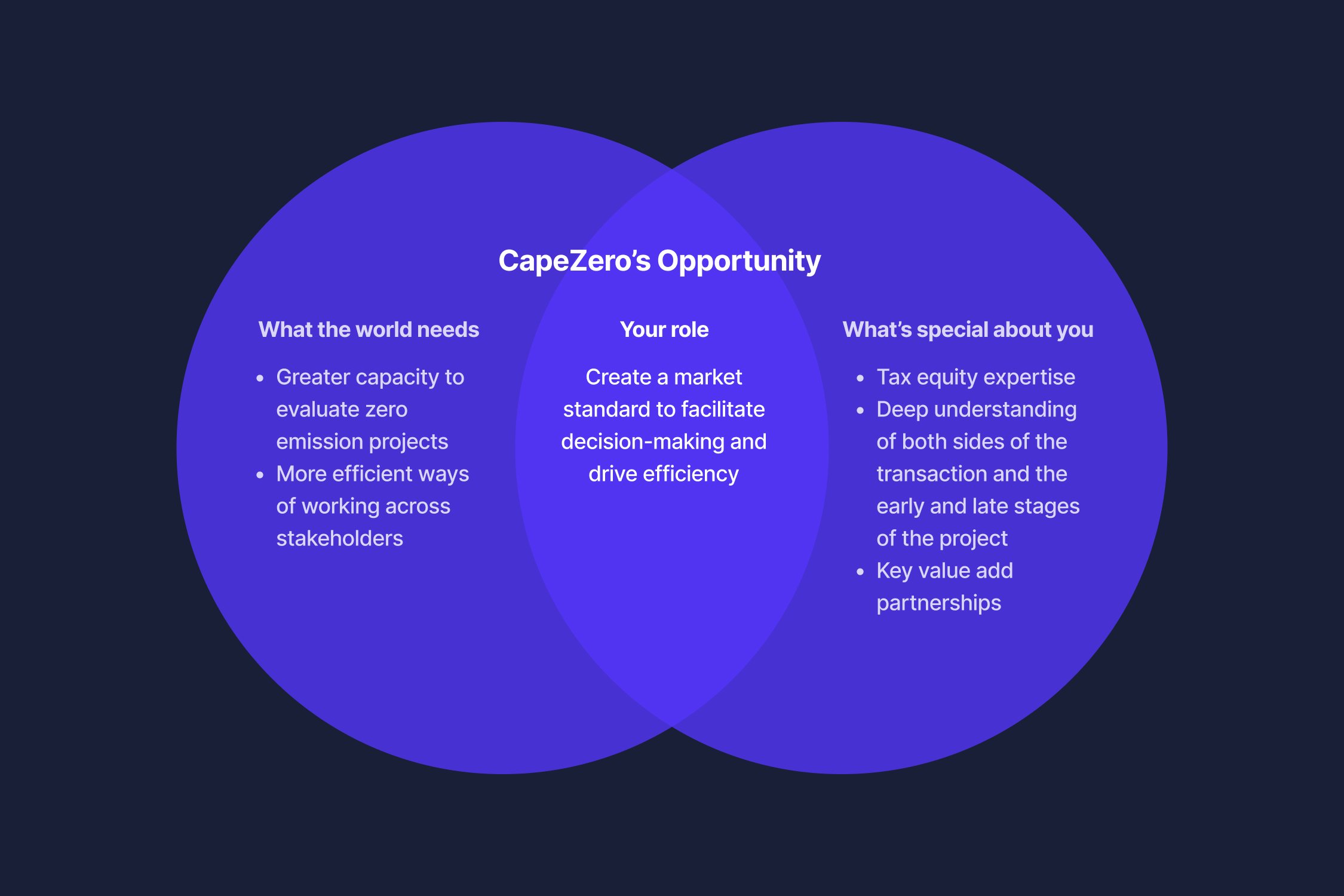
Industry stakeholders were used to fragmented spreadsheets and bespoke advisory processes. By reframing the process as a structured modeling system, CapeZero could simplify decision-making and establish a new standard for evaluating renewable energy deals.
This insight shaped both the product strategy and the brand narrative.
SYSTEM CONSTRAINTSEarly 0→1 product stage with evolving features
Financial audience requiring credibility and precision
Limited internal design capacity
Need to support product definition and fundraising simultaneously
DESIGN PRINCIPLESTurn complexity into systems
Reframe fragmented spreadsheet workflows into structured models that support clearer decision-making.
Make models legible
Surface assumptions, relationships, and outcomes so financial logic is easier to understand and discuss.
Design for trust
Balance technical innovation with the credibility expected in institutional finance.
Start with a clear wedge
Prioritize the highest-value workflow first to demonstrate product value before expanding capabilities.
KEY DECISIONSDefine the first wedge in the market
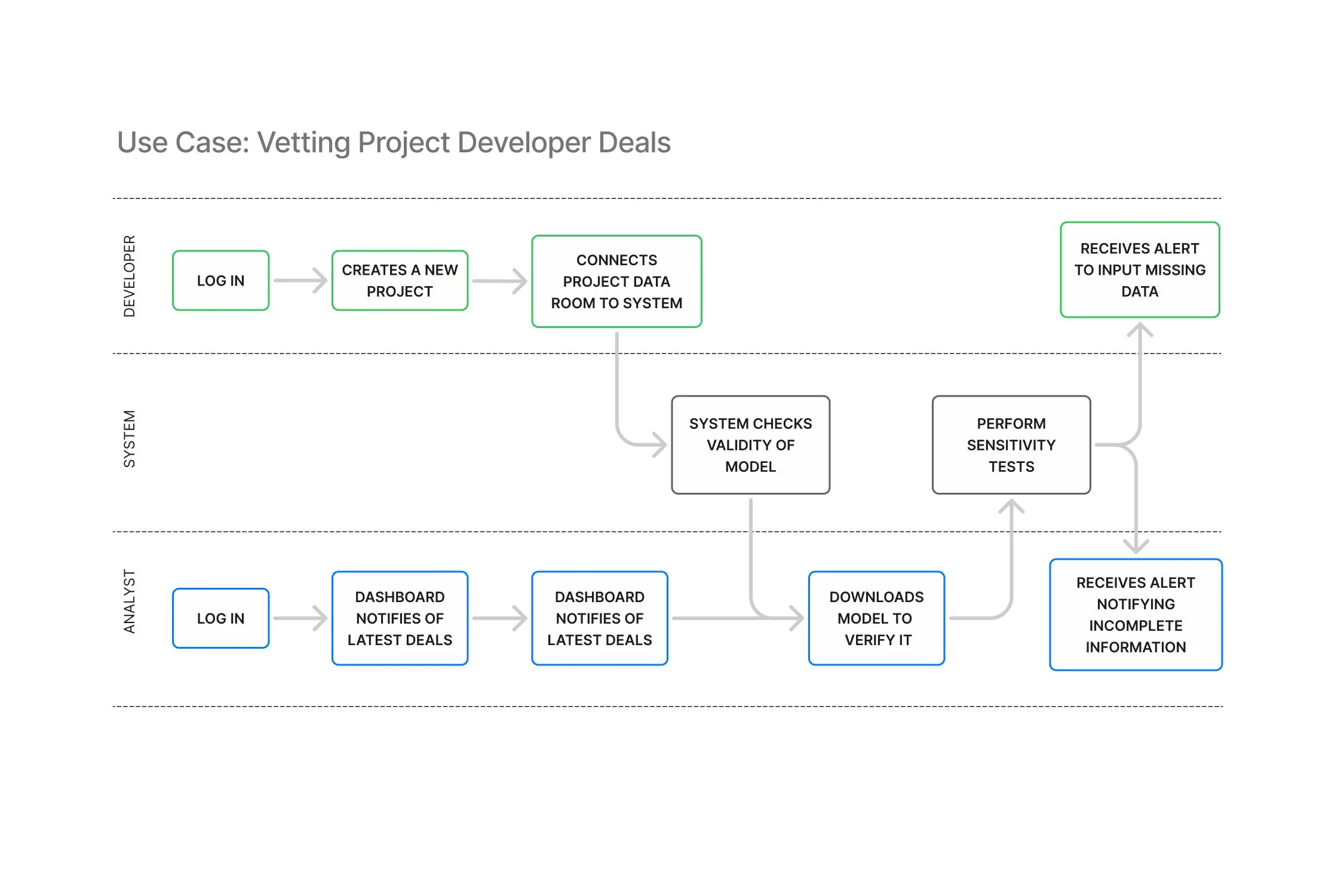
Rather than positioning CapeZero as a broad renewable finance platform, we identified the highest-value modeling use cases and structured the product around those workflows.
Frame the product as a system
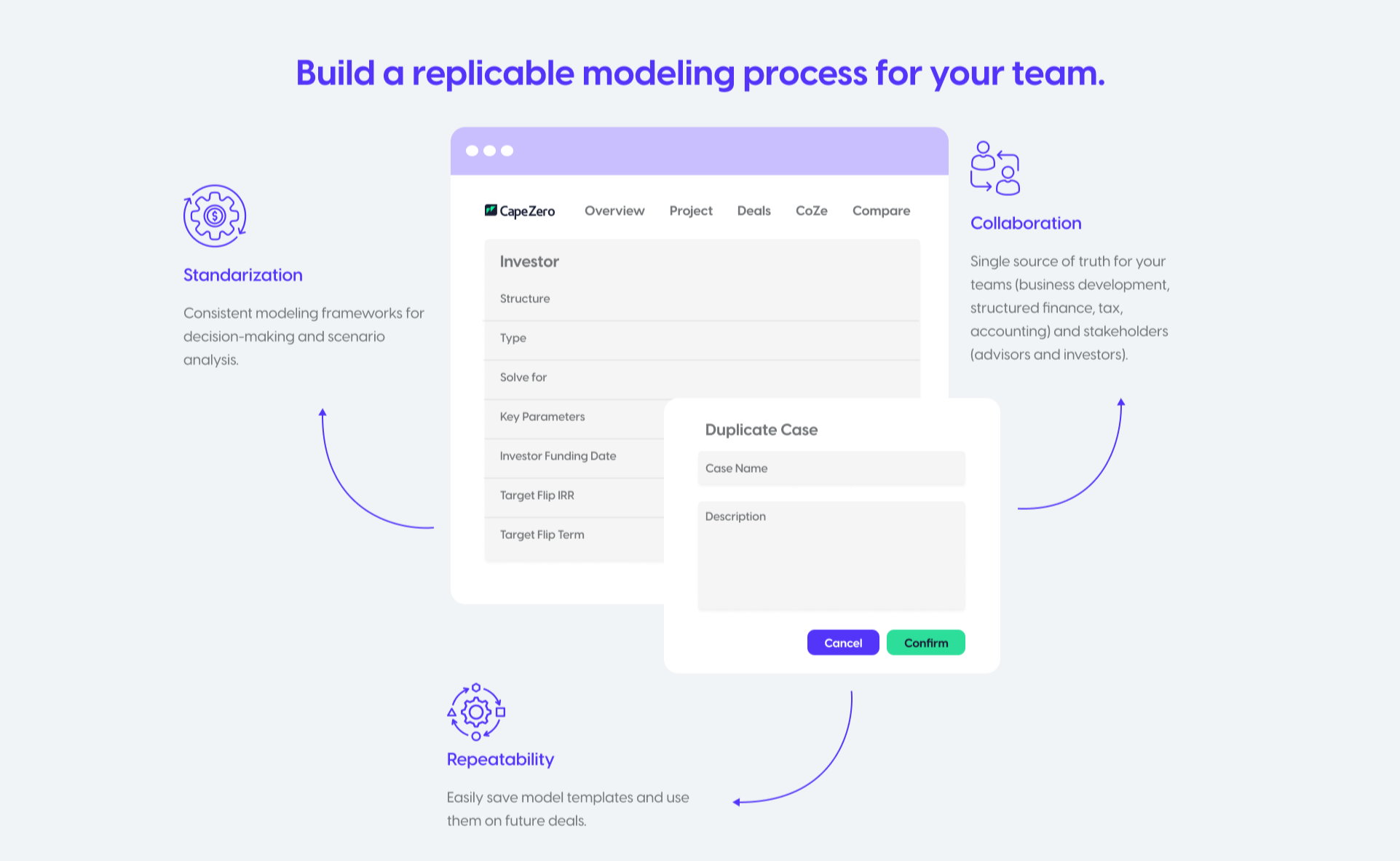
The platform was positioned as a structured modeling system, not just another financial calculator—helping stakeholders understand how transactions fit together.
Build credibility through product-driven storytelling
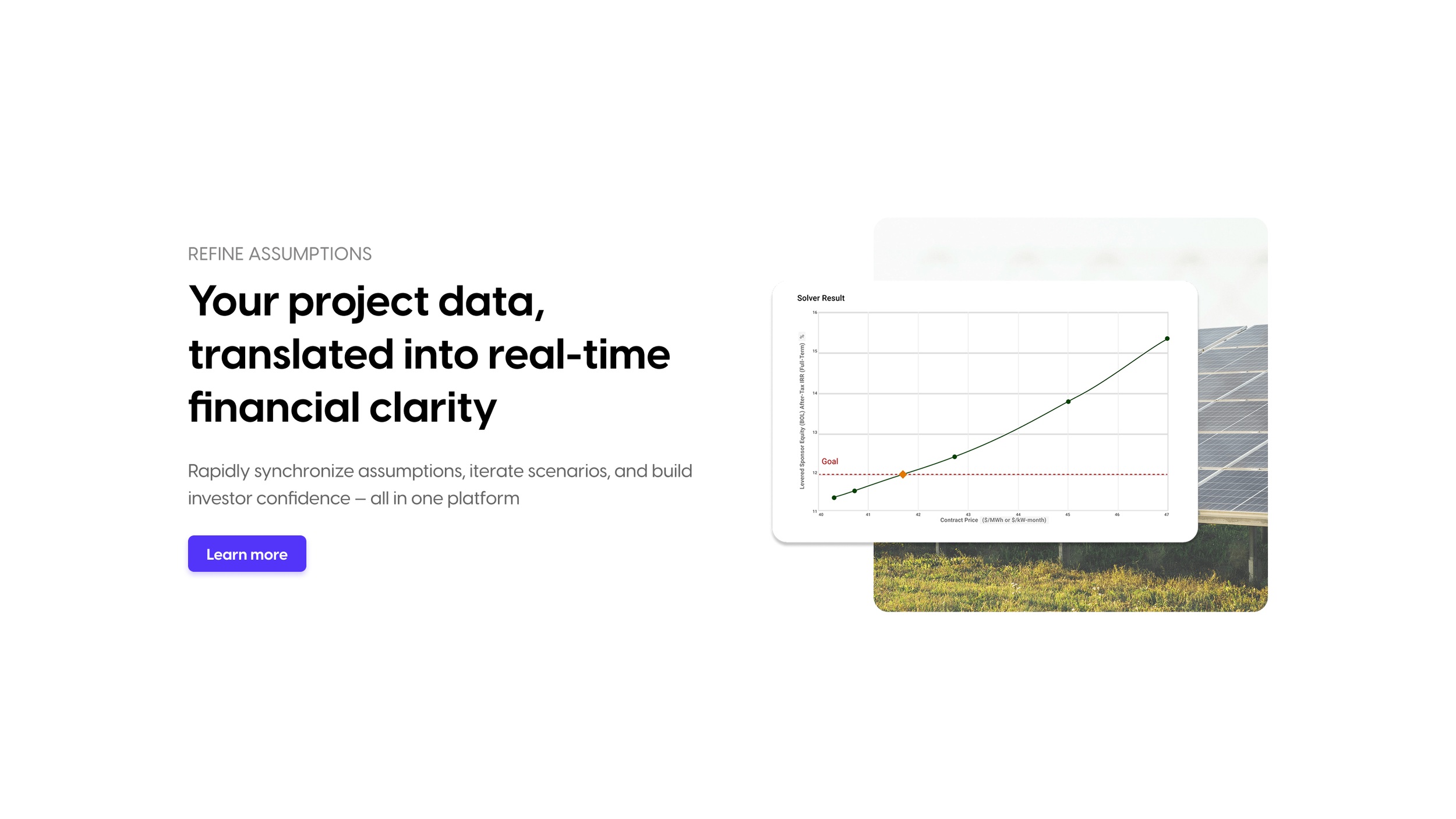
The brand and experience needed to signal technical rigor and institutional trust while still conveying innovation in renewable energy finance.


WHAT I PERSONALLY DROVELed the engagement end-to-end for one year
Assembled and directed a multidisciplinary team of five
Conducted customer and partner interviews and competitive analysis
Partnered with the CEO to define the product strategy and value proposition
Identified early use cases and product workflows
Designed the core user flows structuring the first version of the platform
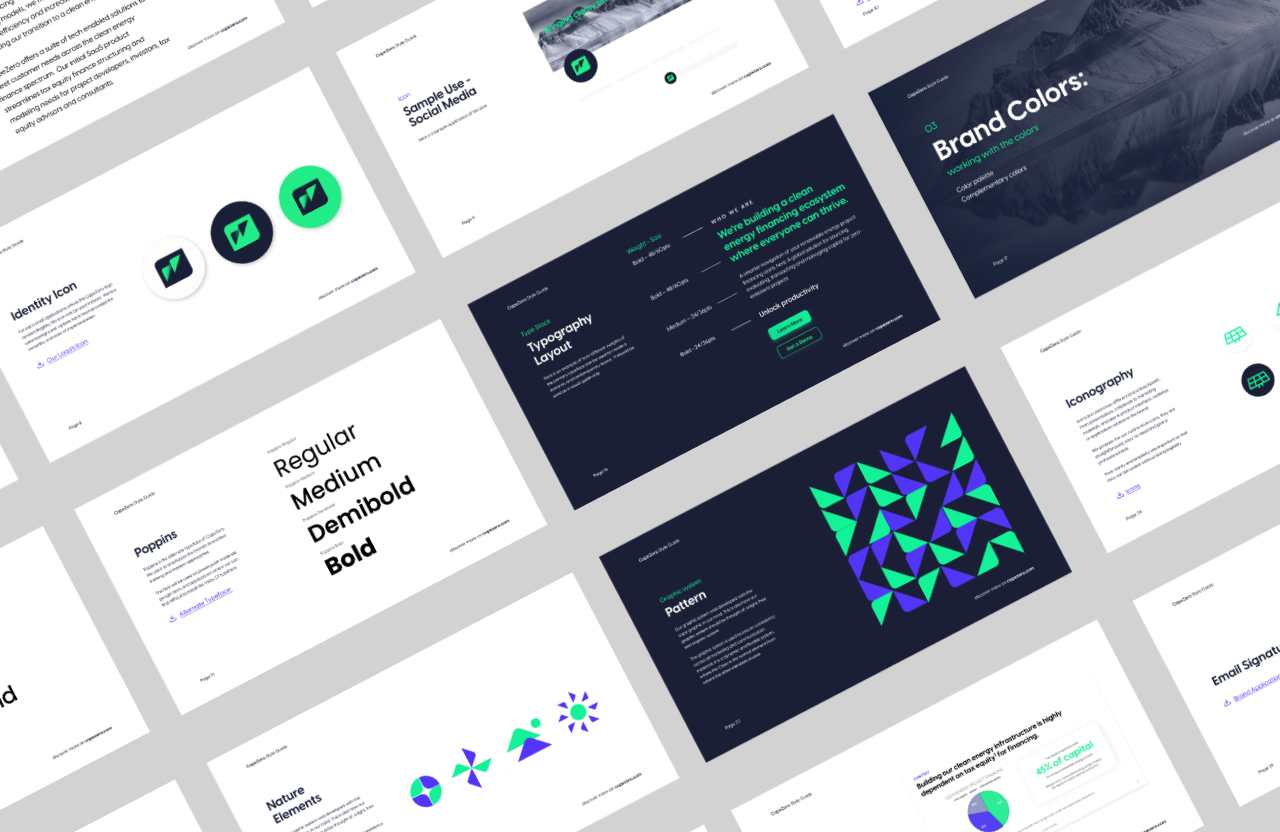
Led development of the brand system and product narrative
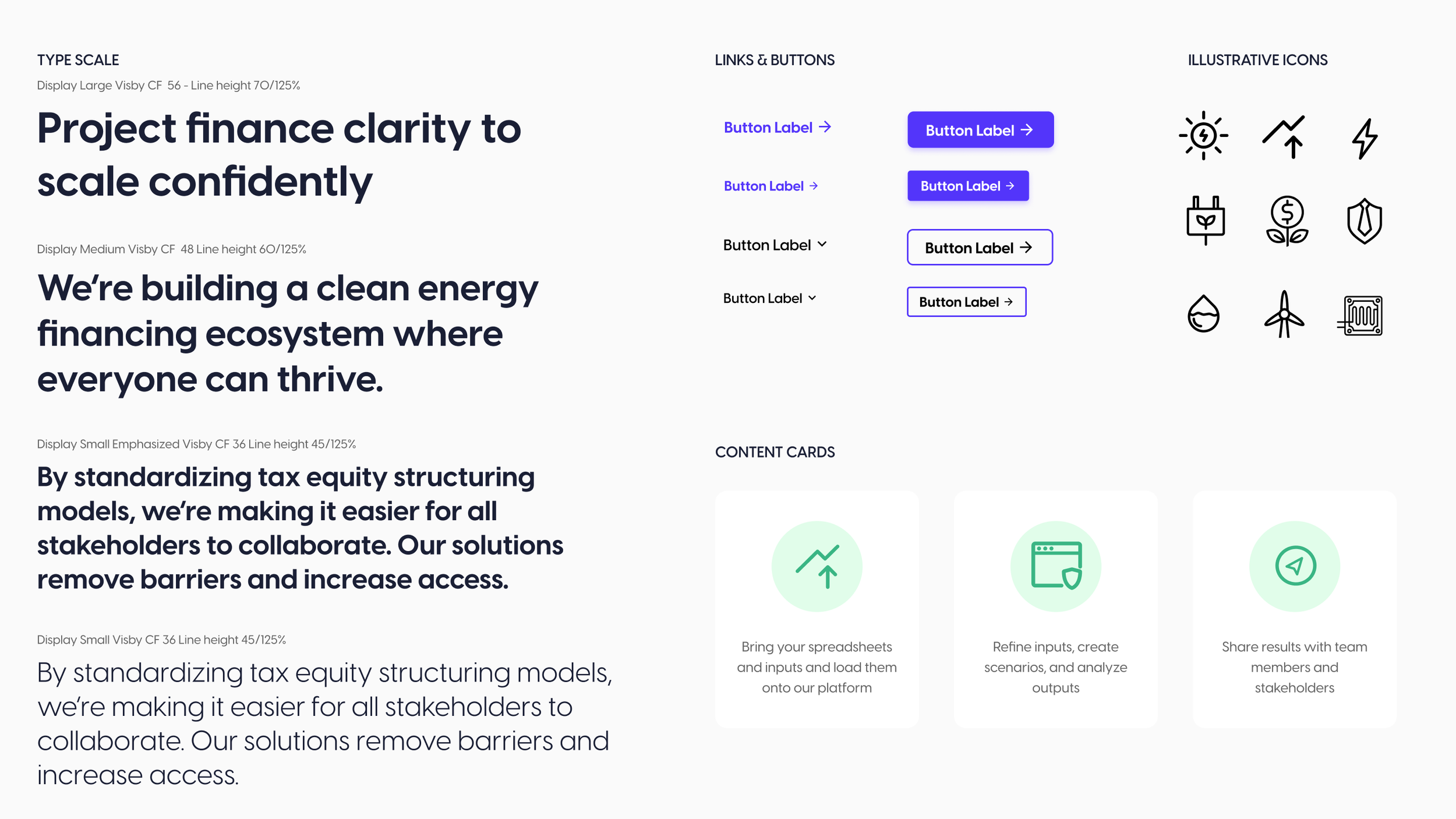
Created a design system and component library to scale internal execution
IMPACTThe work helped CapeZero clarify its position in the market and articulate the value of its platform to early customers and investors.
📢
Clear product narrative supporting customer acquisition
✎
UX flows shaping the first version of the platform
✓
Brand and design system enabling consistent communication
$$
Strategic positioning supporting successful fundraising
KEY LEARNINGSEarly-stage product design often begins with narrative clarity
Before a product can scale, teams must align around the problem they are solving and how the product changes the mental model of the work.
In complex industries, trust is a design requirement
Positioning, product structure, and visual design must signal reliability to overcome skepticism in conservative markets.
Strategy and experience design must evolve together
Defining the product wedge and the user workflows simultaneously helped ensure the product vision remained grounded in real customer needs.
Project Team
Dyanis De Jesus, Catherine Leelong, Cort Tafoya, Maria Valdes

Manish Hebbar, Chief Executive Officer, CapeZero