
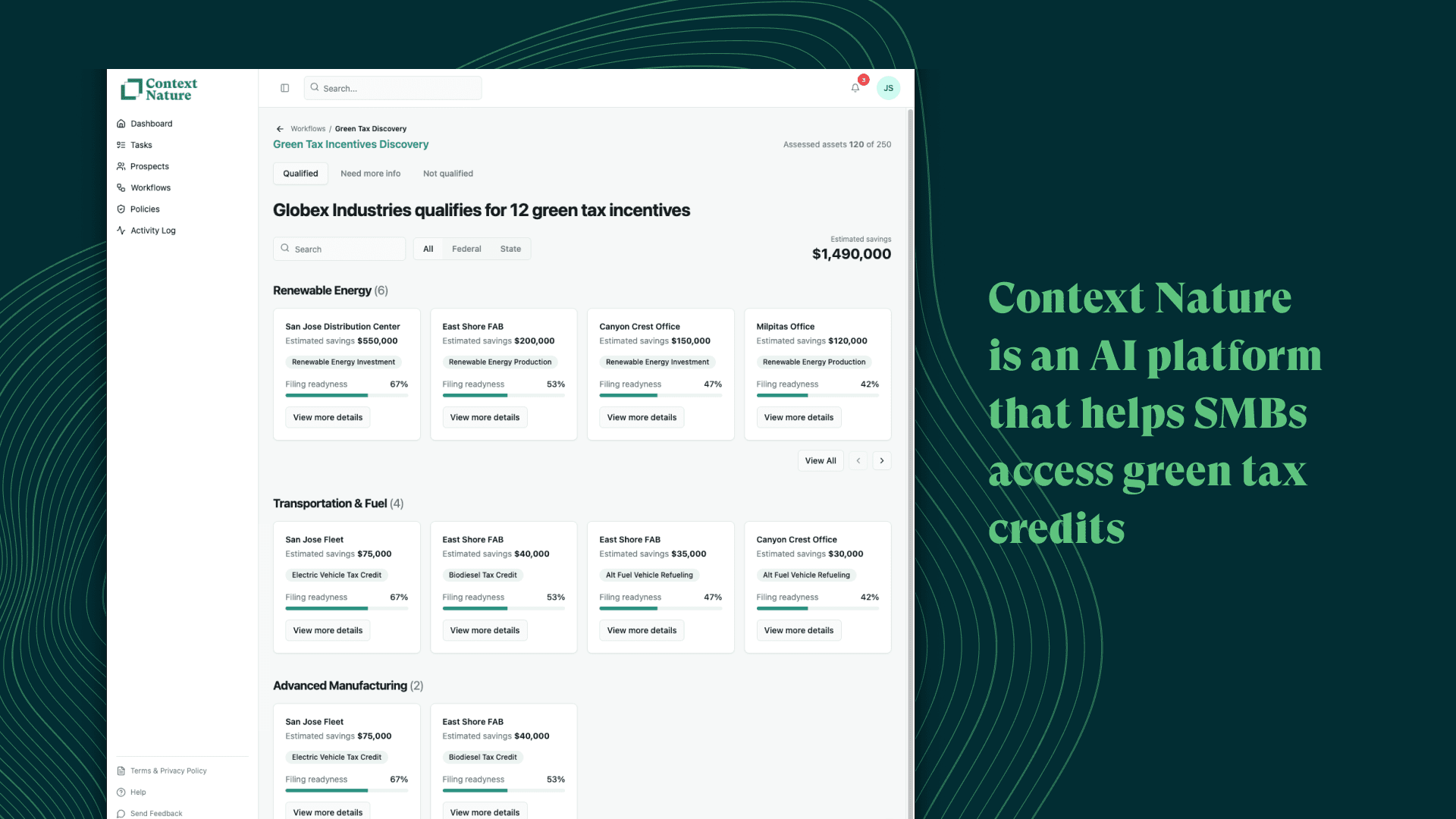
OVERVIEWDesigning Trust in AI-Powered Tax Systems
Helping tax accountants unlock green tax credits for SMBs by designing human-in-the-loop AI workflows that preserve professional accountability. By redesigning workflows for the accountants who control access to incentives, we created a path for hundreds of SMBs to pursue credits that were previously ignored.
Role: Principal Product Designer
Duration: 2.5 years
Scope: Product strategy, AI interaction design, workflow systems, research, validation with accounting firms
Key outcomes
80%
faster tax credit discovery
↔
Expanded the serviceable market
IRS
Recognized by U.S. Treasury and IRS stakeholders
✓
Secured accounting firms as design partners
PROBLEMDespite strong financial incentives, most SMBs fail to access green tax credits. Initially we assumed it was an awareness issue, but we soon discovered it was a structural barrier.
Specialty tax accountants act as gatekeepers. Because evaluating a credit requires extensive document review and carries professional liability, firms typically prioritize large credits where the effort is financially justified.
As a result, most SMB credits—often below $2M—are never pursued.
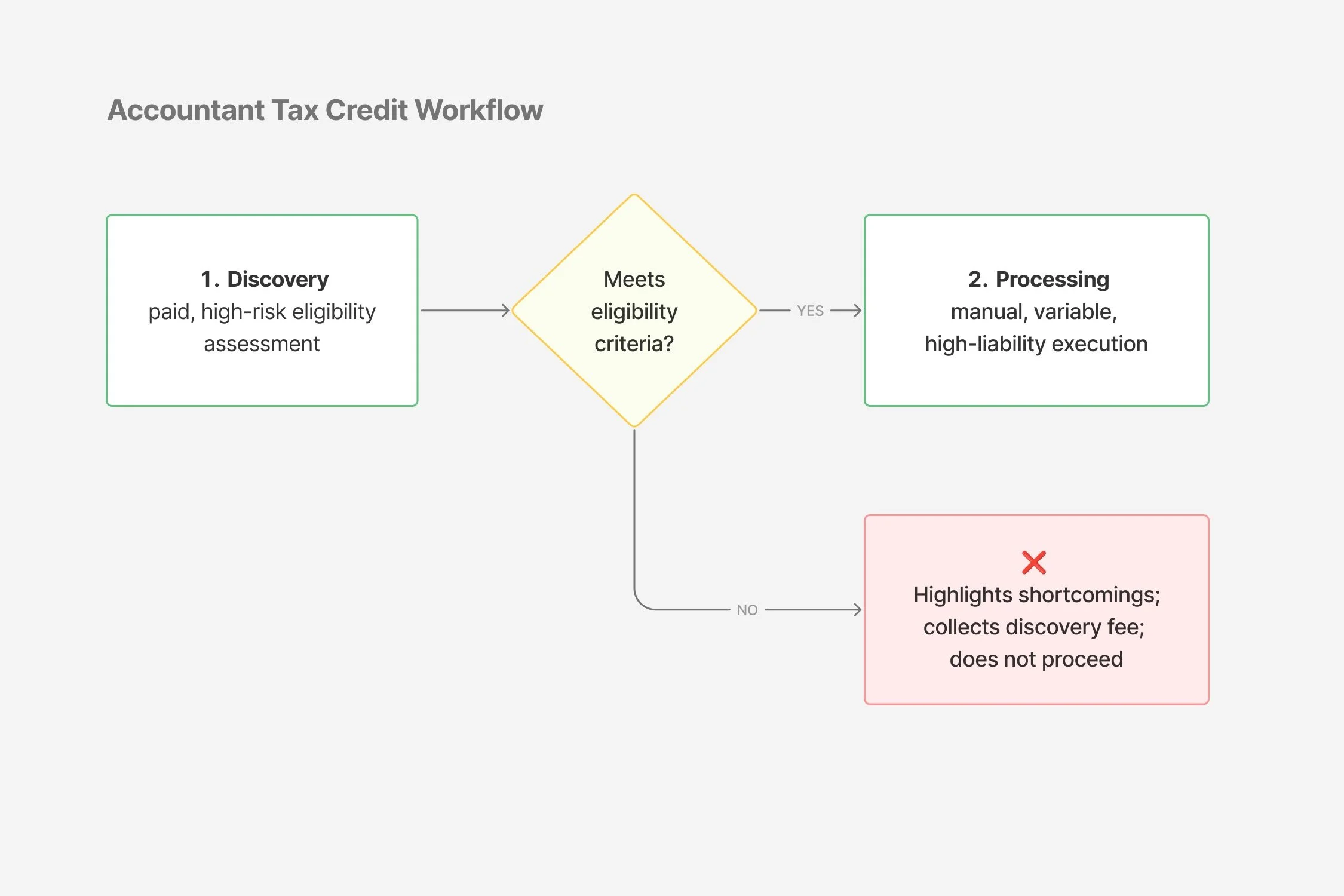
INSIGHTCustomer discovery revealed that tax credit work is a two-phase, high-trust workflow:
Discovery: Accountants review financial records and prior filings to determine eligibility.
Processing: If eligible, accountants gather documentation and prepare filings.
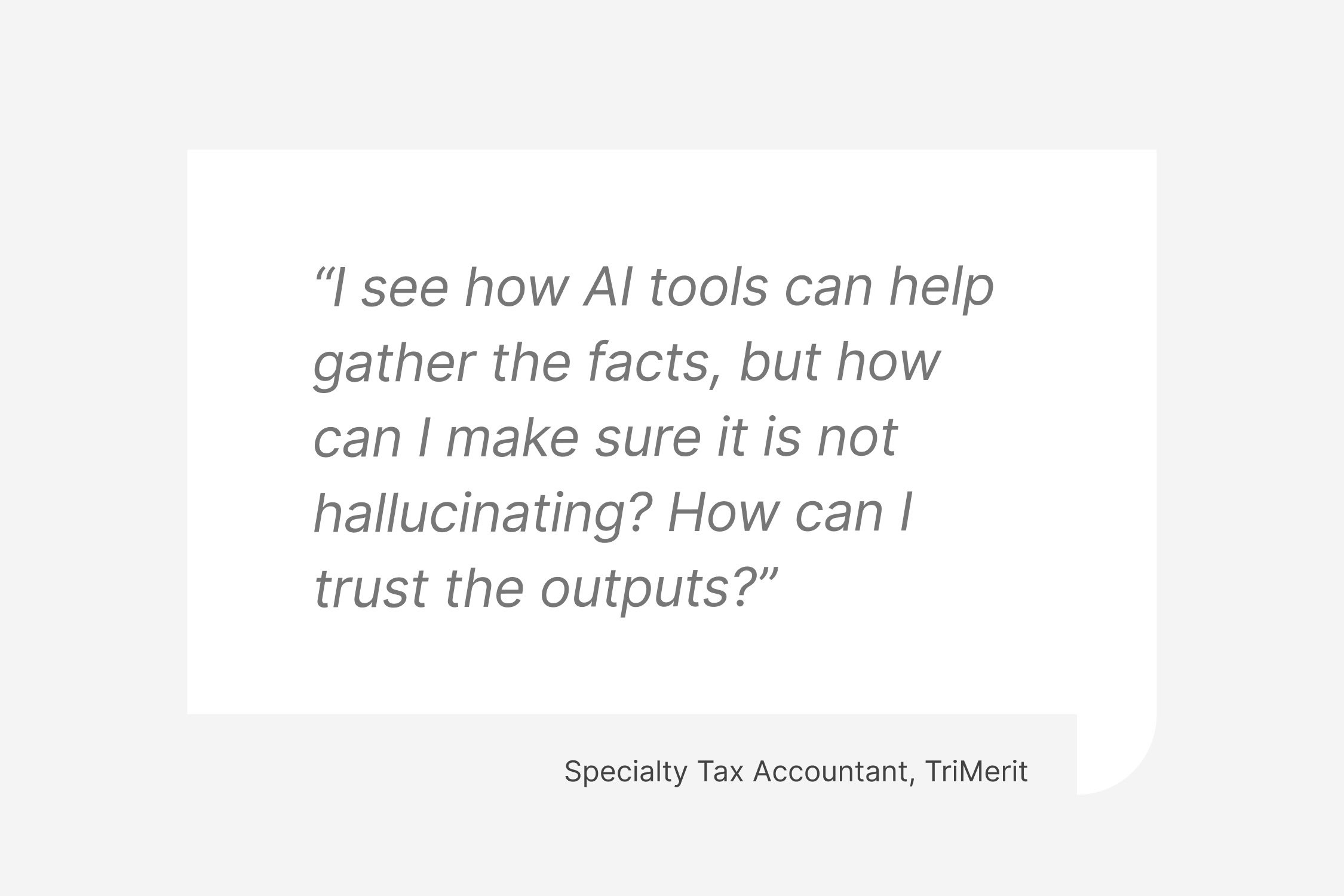
Because incorrect guidance can expose firms to risk, accountants prioritize correctness and defensibility over speed.
The design challenge shifted from building faster tools to building trustworthy systems.
SYSTEM CONSTRAINTSDesigning in this ecosystem required navigating several structural realities:
Percentage-based fee models make smaller credits economically unattractive
Discovery requires hours of manual document review
Errors expose accountants to financial and reputational liability
Documentation requirements vary widely across credits
Any solution had to reduce effort while preserving transparency and control.
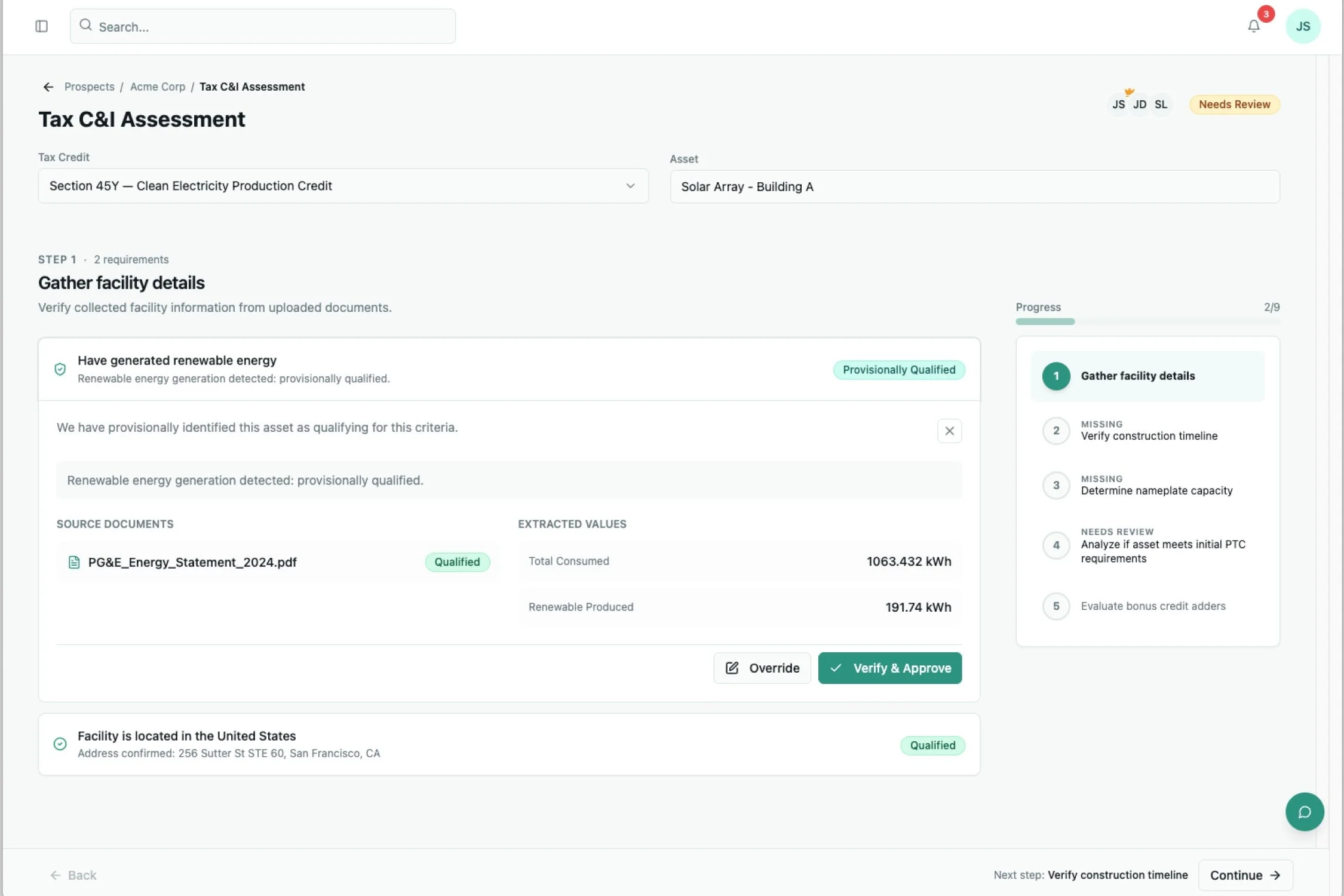
DESIGN PRINCIPLESTransparency over opacity
Automated decisions must be traceable to source data.
Human oversight over full automation
AI assists professionals rather than replacing them.
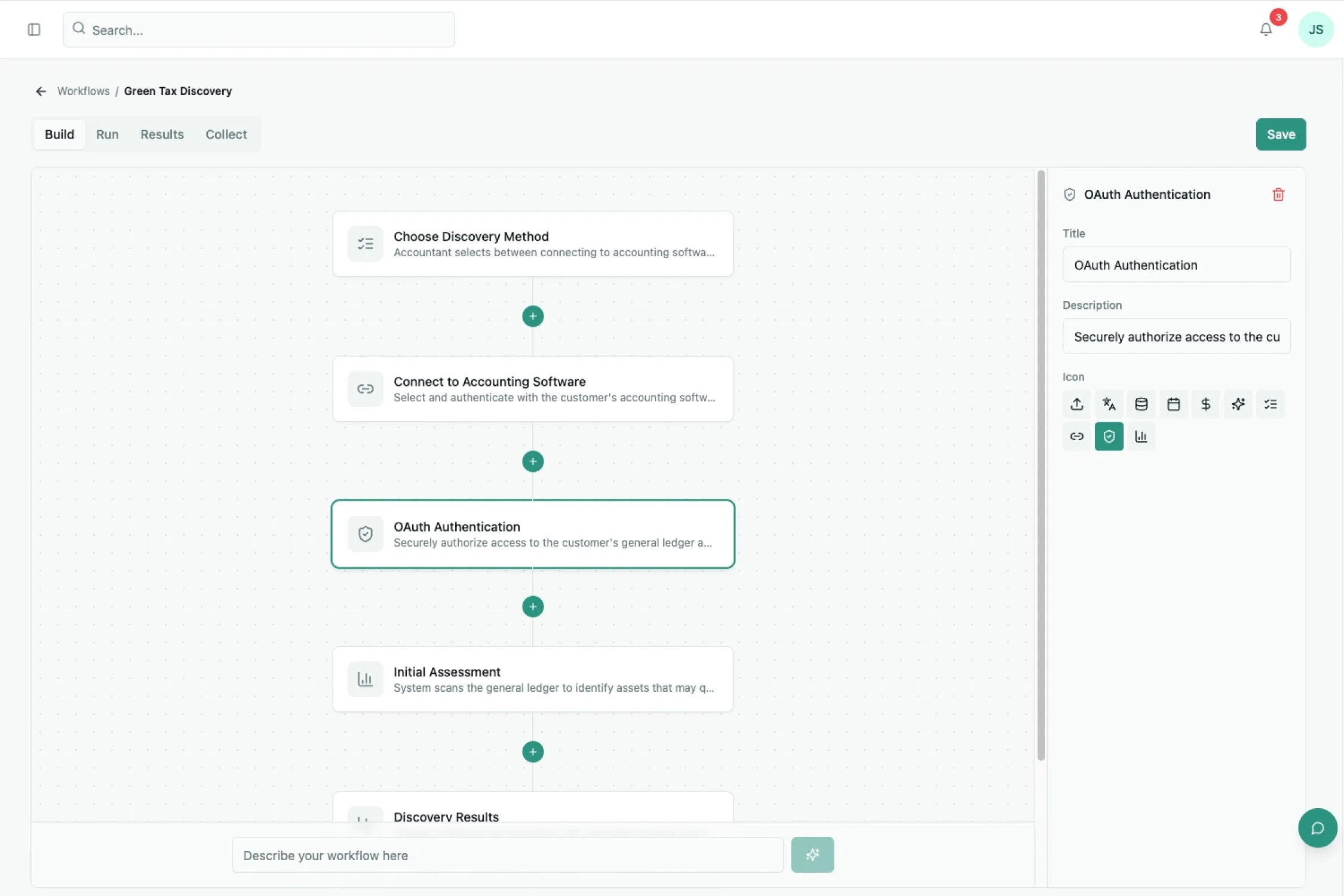
Structure before scale
Structured data capture enables reusable workflows.
Design for intermediaries
Unlock adoption by empowering the gatekeepers.
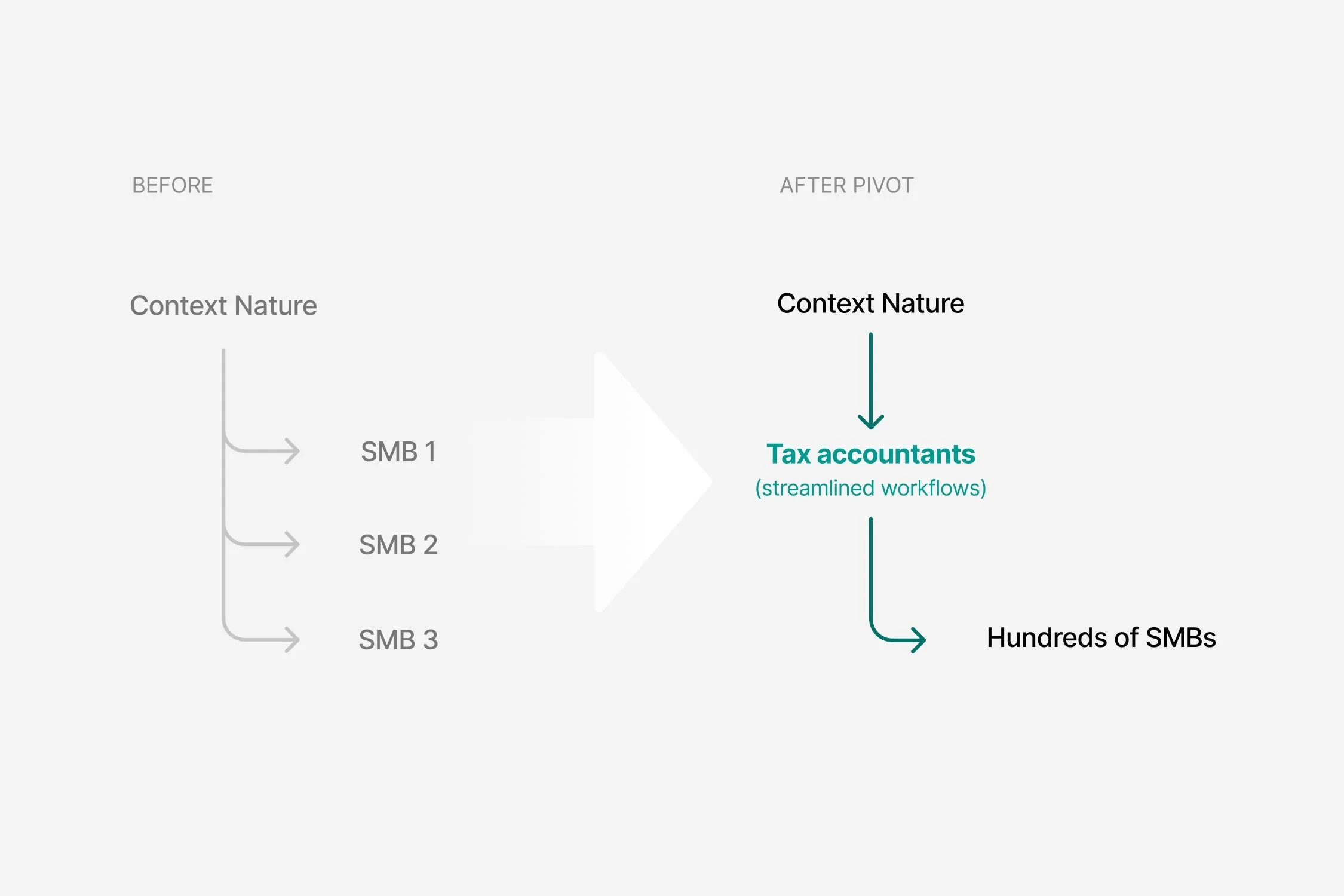
KEY DECISIONSDesign for the gatekeepers, not the SMBs
Empowering accountants was the fastest way to expand access to credits.
Optimize for trust before speed
Explainability and traceability drove adoption in a high-liability domain.
Create reusable credit workflows
Structured workflows allowed the system to scale across multiple credit types.
WHAT I PERSONALLY DROVELed customer discovery with specialty tax accountants
Reframed product strategy around intermediary economics and risk
Designed human-in-the-loop AI interaction patterns
Built structured tax credit discovery workflows
Facilitated weekly co-design sessions with accounting firms
Aligned product, engineering, and domain experts around trust-driven design

IMPACTBy redesigning discovery workflows for accountants, the platform made previously unprofitable SMB credits viable.
80%
Faster discovery time
↪
Established a repeatable acquisition channel
$$
Secured design partnerships with accounting firms
IRS
Received validation from U.S. Treasury and IRS stakeholders
KEY LEARNINGSIn regulated domains, trust precedes efficiency.
Intermediaries shape access to complex systems.
Co-design accelerates adoption and validation.
Project Team
Ephi Banaynal Dela Cruz, CEO, Context Nature
Jonathan Xia, Head of Engineering, Context Nature
Allison Chia-Yi Wu, Head of AI/ML, Context Nature
Ploy Cochard, Product Designer, Context Nature
Rohit Kalkundre, Data Analyst, Context Nature