
OVERVIEWFrom Rebrand to Decision Clarity
Designing a customer-centered discovery experience that helps enterprise buyers evaluate complex AI solutions and enables teams to scale digital experiences globally.
Role: Digital Director (Consulting Engagement)
Duration: 9 months
Scope: Customer research, content strategy, information architecture, design systems, AI-enabled operations, governance
Key outcomes
30%
Reduction in bounce rate
50%
Faster page production
~100
pages rewritten with AI-assisted workflows
SQLs
Early lift in sales qualified conversations
PROBLEMHitachi Digital Services helps enterprises adopt AI and digital infrastructure across industries like energy and manufacturing.
Over time, the website had grown into a 750+ page repository that mirrored internal teams rather than customer needs.
Analytics showed 70% of visitors leaving after viewing one page, suggesting buyers couldn't determine whether HDS was relevant to them.
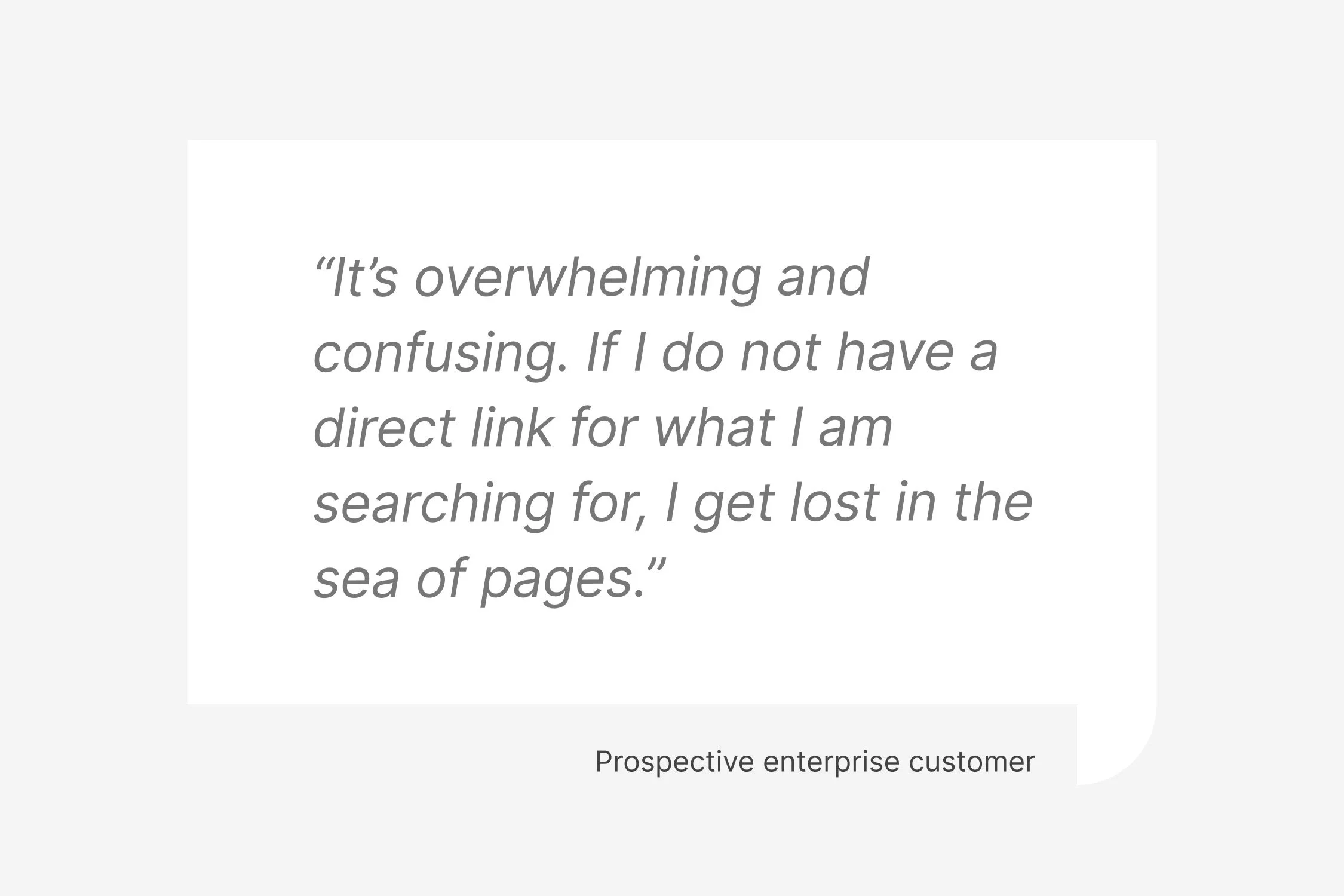
INSIGHTThe project initially began as a brand rollout across digital channels. Early discovery showed the deeper challenge wasn’t visual design—it was decision clarity.
Enterprise buyers evaluating complex technology solutions aren’t browsing — they are trying to determine whether a vendor understands their problem and can deliver results.
Buyers needed help answering three questions quickly:
Can this company solve my challenge?
Do they understand my industry?
What should I do next?
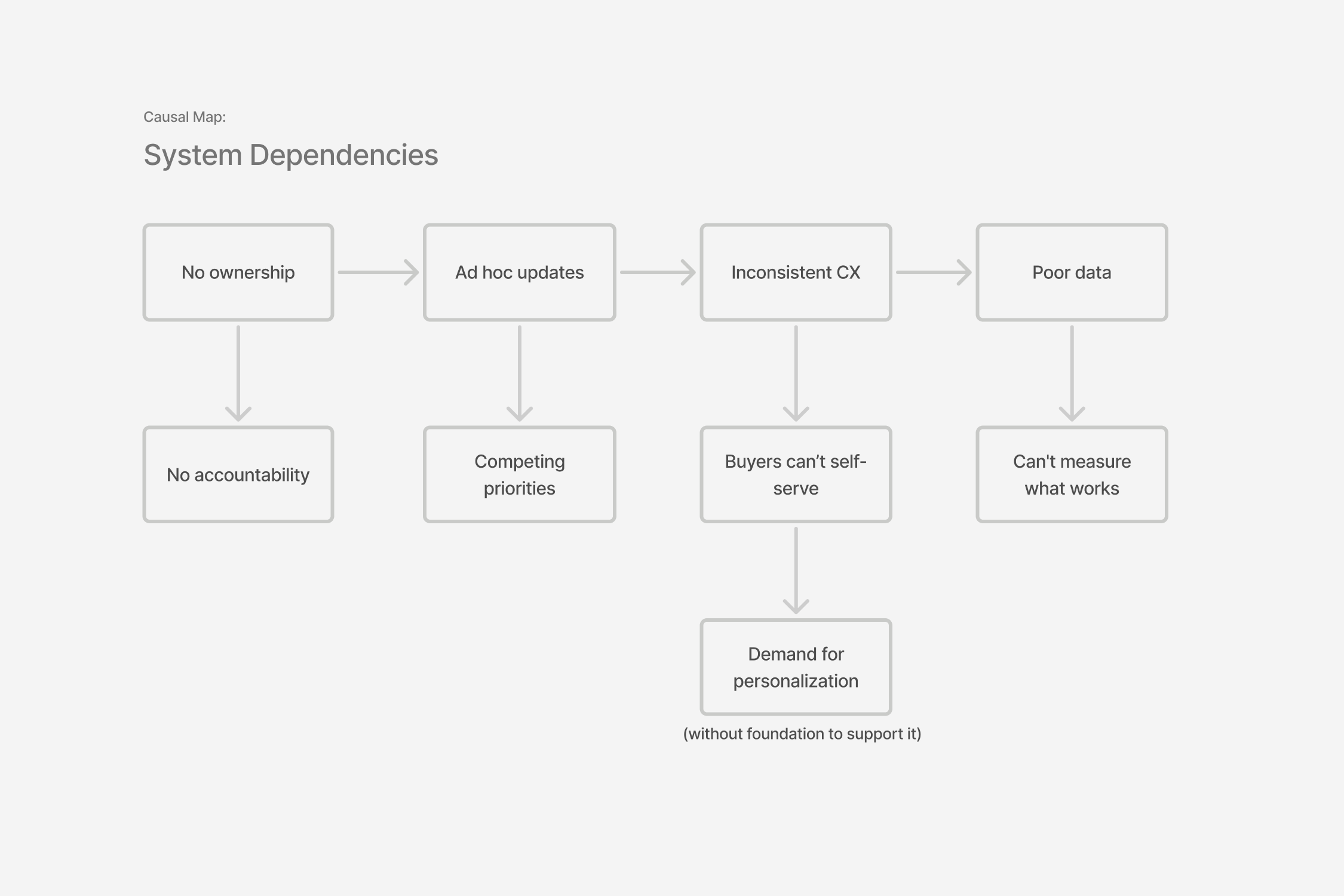
SYSTEM CONSTRAINTSMapping the system revealed several issues reinforcing each other.
There was no clear owner of the website, so teams published content independently.
This created inconsistent experiences and made it difficult to measure what was working.
At the same time, leadership wanted to introduce personalization and AI, but analytics foundations were incomplete and buyer journeys were poorly understood.
Regional teams also needed flexibility while global teams required consistency.
Solving any one of these issues alone wouldn’t have worked. Progress required aligning structure, ownership, data, and workflows.
DESIGN PRINCIPLESHelp buyers decide with confidence
Make the customer challenge, HDS solution, proof points, and next steps immediately clear.
Reduce complexity before adding intelligence
Simplify structure and content before introducing personalization or AI.
Design for systems, not pages
Create reusable patterns—design systems, templates, and workflows that teams can scale.
Make ownership and decisions explicit
Clear governance and shared roadmaps prevent fragmentation across global teams.
KEY DECISIONS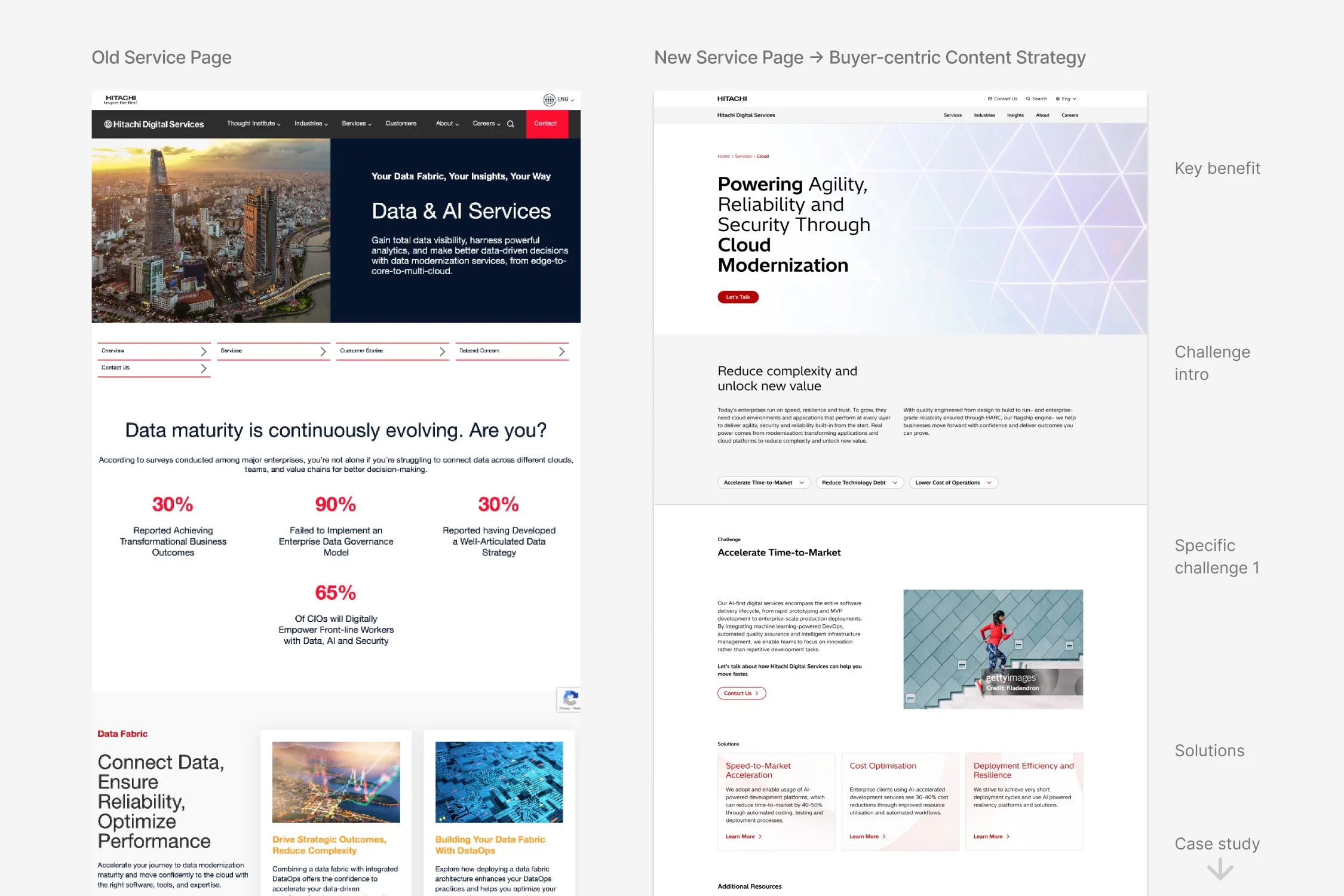
Simplify the experience before adding complexity
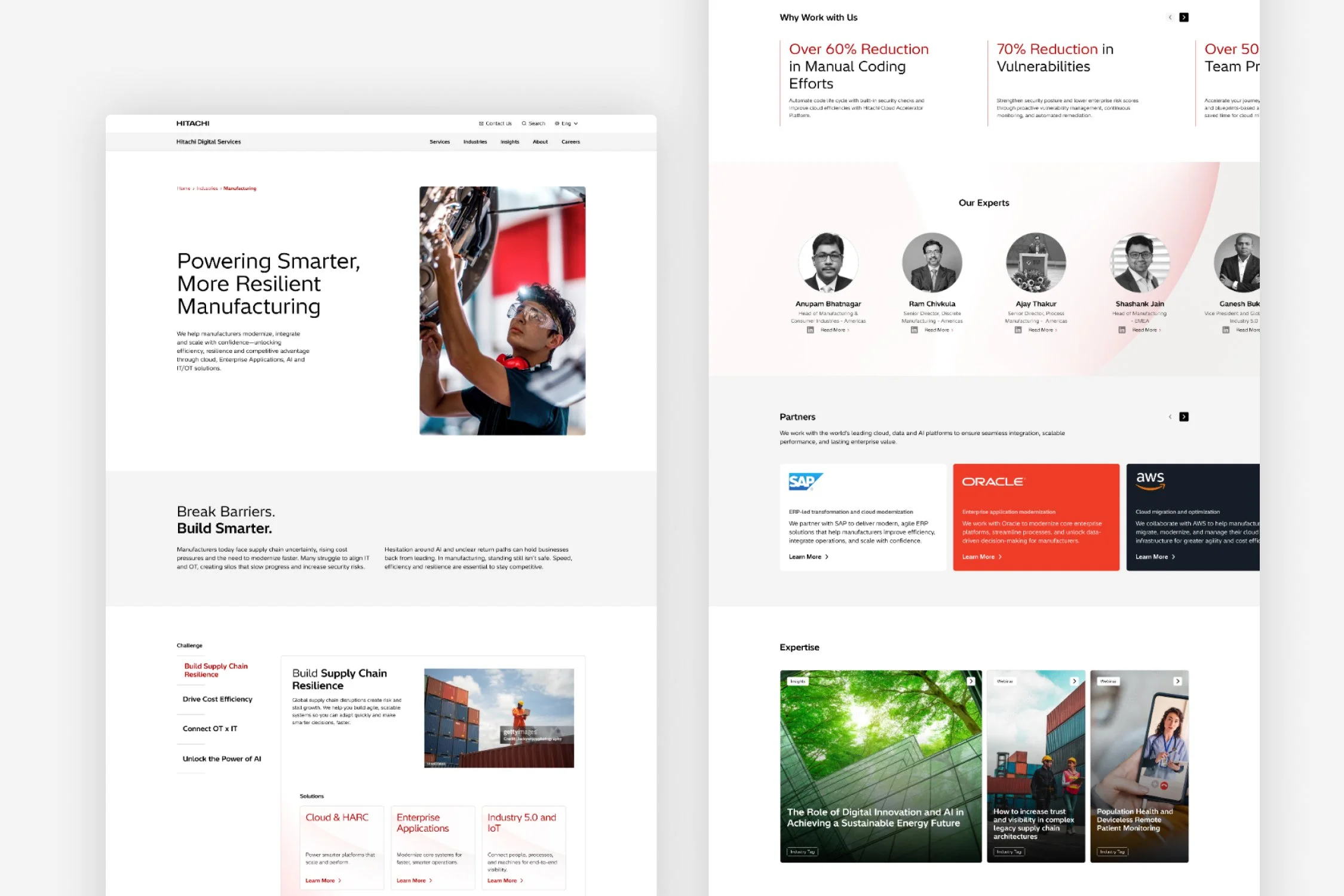
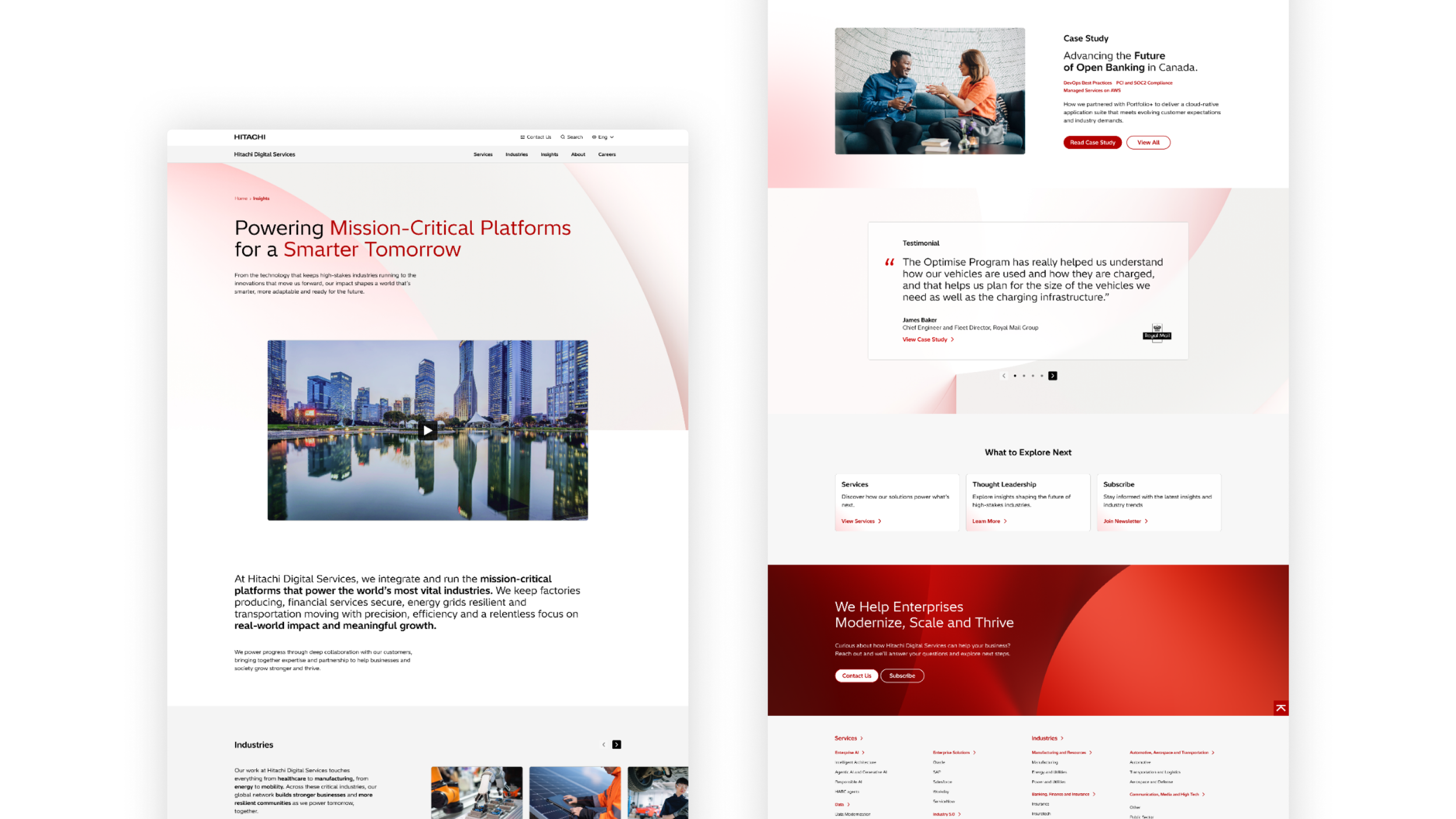
We simplified the site structure and reorganized navigation around how enterprise buyers search for solutions, reducing the site from 750 pages → 350.
Service pages were redesigned using a challenge–solution–proof framework:
Start with the customer challenge
Explain how HDS addresses it
Provide proof through outcomes and case studies
Offer clear next steps
This structure helped buyers quickly determine relevance and move forward with confidence.
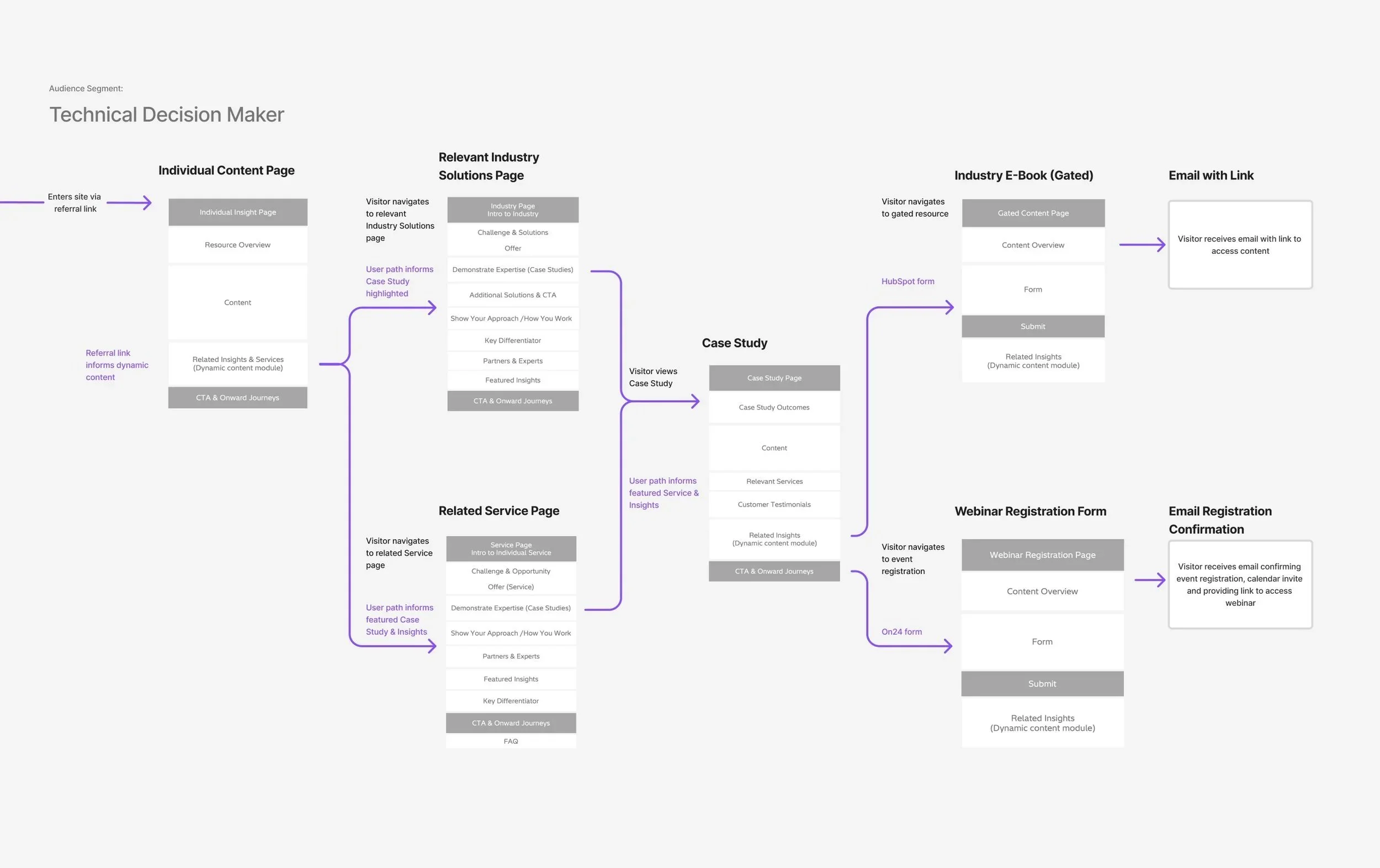
Build measurement before personalization
There was strong internal pressure to introduce personalization immediately. However, the site lacked reliable journey tracking and a clear understanding of how visitors navigated content. I facilitated working sessions with 18 global stakeholders across marketing, IT, and regional teams to map dependencies and align on a shared roadmap. This made the sequencing clear: simplify → measure → personalize.
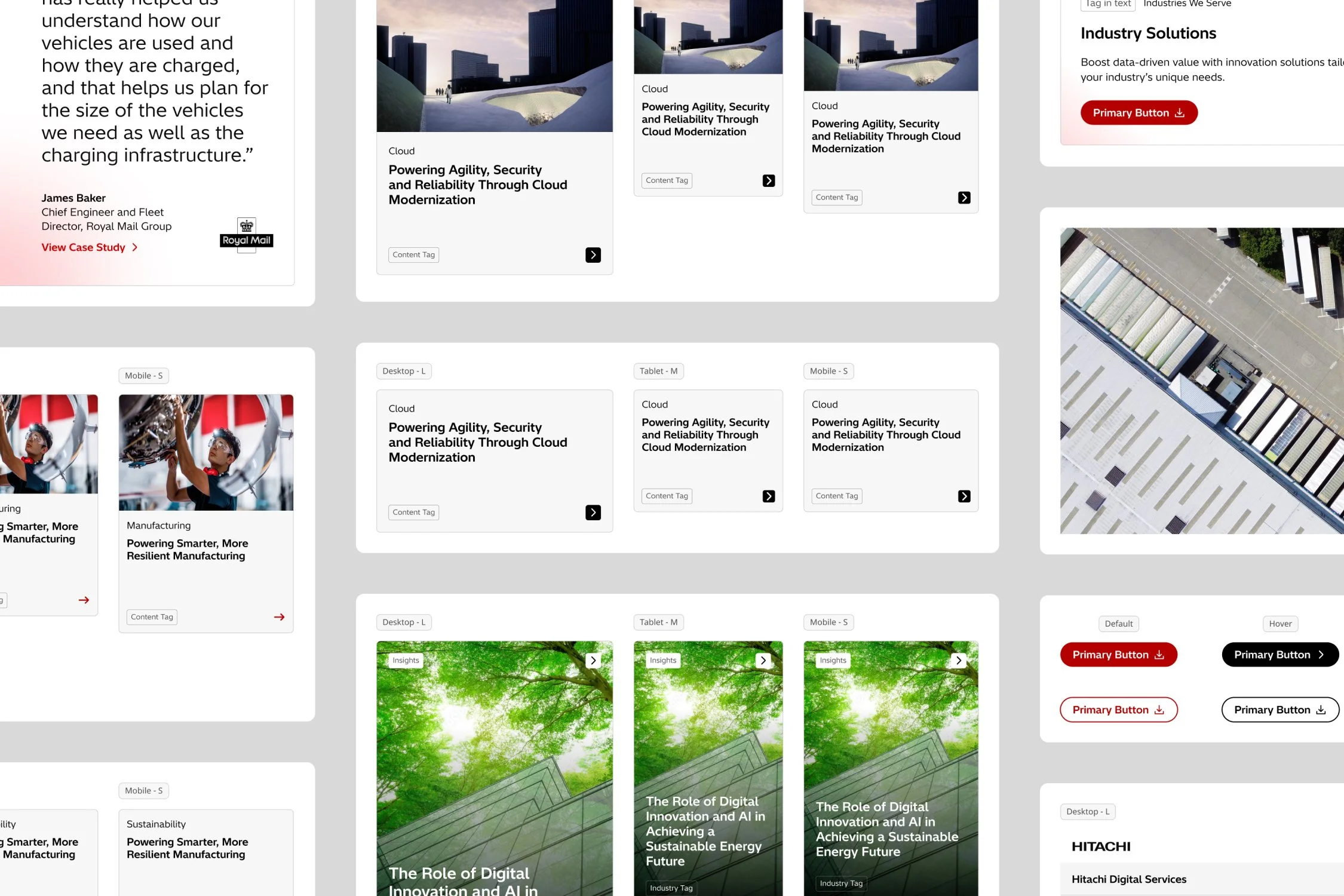
Create systems teams could scale
To ensure the site could scale without fragmenting again, we introduced reusable systems:
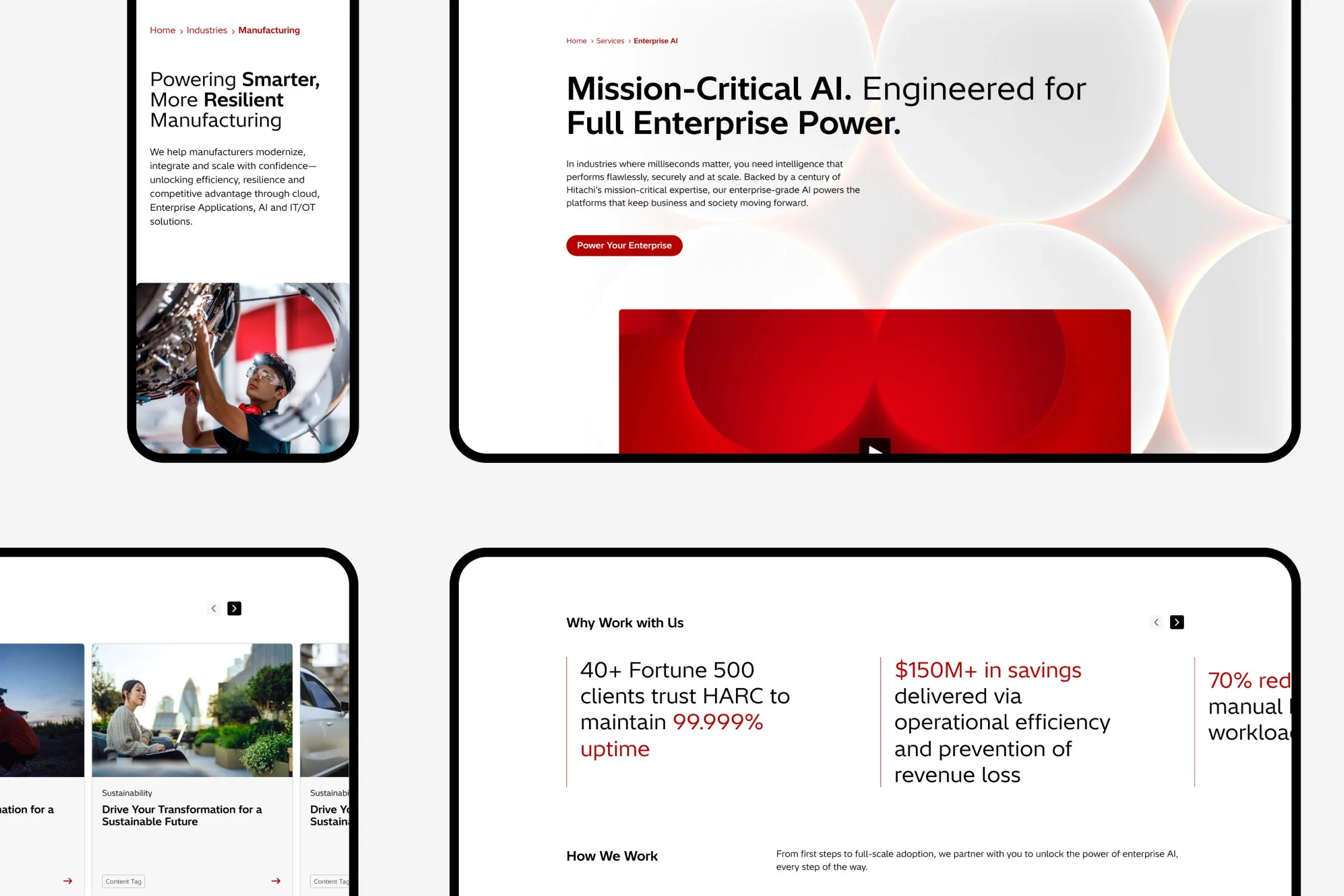
A design system and reusable page templates
Centralized request management and ownership
Governance processes for publishing decisions
AI-assisted content workflows that helped scale rewriting nearly 100 pages
I also designed the initial flows for an AI-powered conversational discovery experience, helping visitors surface relevant capabilities based on their industry and goals.
WHAT I PERSONALLY DROVEReframed the project from brand implementation to customer decision clarity
Led discovery using analytics, CRM data, customer interviews, and stakeholder research
Defined the transformation strategy and sequencing of initiatives
Facilitated alignment across 18 global stakeholders and established a unified roadmap
Designed the information architecture and customer-centered content model
Led design system development and reusable page templates
Introduced AI-assisted content workflows to scale rewriting ~100 pages
Designed the initial conversational AI discovery experience
Established governance and operational processes to prevent re-fragmentation
IMPACTThe site shifted from a static repository to a platform teams can continuously improve .
30%
Reduction in bounce rate
~100
pages rewritten with AI workflows
50%
Went from 6 weeks to 3 in page production time
SQLs
Early lift in SQLs
KEY LEARNINGSClarity enables alignment
Shared artifacts and explicit trade-offs helped global teams move forward together.
Systems scale better than hero work
Reusable patterns and governance prevented fragmentation and accelerated delivery.
AI amplifies strong foundations
AI-assisted workflows became valuable only after content structure and analytics were in place.
Project Team
Jemma Campbell, Chief Creative Officer, Ladyship
Rana Brightman, Chief Strategist, Ladyship
Gemma Lee, Senior Designer, Ladyship
Mia Clarke, Copy Director
Alicia Oluhara, Project Manager, Ladyship
Jijo Thomas, Engineering PM, GlobalLogic
Jaiveer Singh, Engineering, GlobalLogic
HelloKindred & Sage
And many within Hitachi Digital Services

Menaka Thillaiampalam, Former CMO, Hitachi Digital Services